
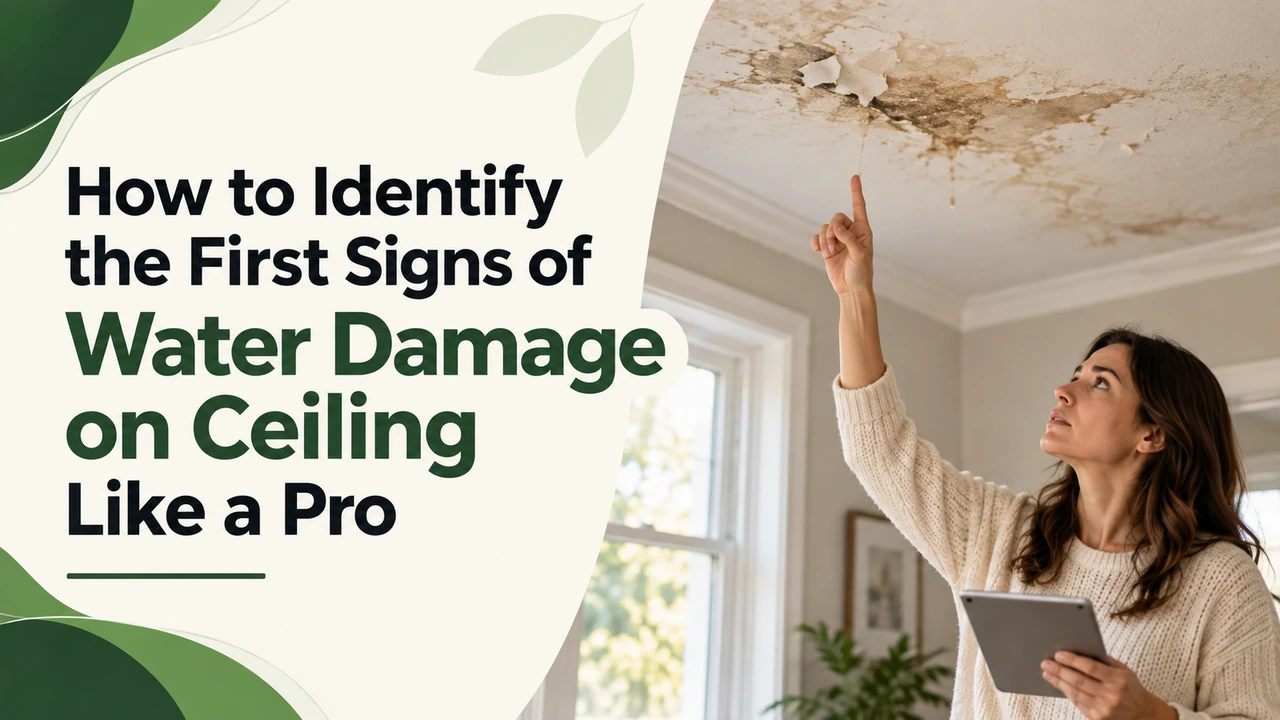
When water sneaks into your home, it rarely announces itself with a dramatic waterfall from the ceiling. Most of the time, it starts quietly: a faint stain, a tiny bubble in the paint, a musty odor you can’t quite place. If you know how to spot the first signs of water damage on ceiling, you can catch leaks early, protect your home, and save a lot of money on repairs.
Why Early Ceiling Water Damage Detection Matters
Water damage is more than just an ugly stain. Ignoring it can lead to:
- Structural damage to drywall, plaster, joists, and insulation
- Mold and mildew growth, which can affect indoor air quality and health
- Electrical hazards if moisture reaches wiring, fixtures, or junction boxes
- Higher repair costs, especially if the roof, plumbing, and interior finishes are all affected
Catching early water damage on ceiling surfaces means smaller repairs, less disruption, and a safer home.
Common Causes of Water Damage on Your Ceiling
Before you start inspecting, it helps to understand where the water might be coming from. The most common sources include:
1. Plumbing Leaks Above the Ceiling
A bathroom, laundry room, or kitchen located above the damaged area is a big clue. Leaking supply lines, loose fittings, overflowing tubs, or slow-dripping drains can all cause hidden ceiling water damage over time.
2. Roof Leaks and Damaged Flashing
If the damaged ceiling is directly under the roof, especially in upper floors or attics, the culprit may be:
- Missing or cracked shingles
- Damaged flashing around chimneys, vents, or skylights
- Ice dams or standing water on a flat roof
Roof issues often show up as brown ceiling water stains that grow after heavy rain.
3. Condensation and HVAC Issues
Poor ventilation, ductwork condensation, or a leaking HVAC unit in the attic can lead to slow, persistent moisture. This usually creates patchy discoloration or damp, cool spots on the ceiling.
4. Window or Exterior Wall Leaks
If the damaged area is near an exterior wall, water may be entering through:
- Cracked caulking
- Damaged siding or stucco
- Leaky window frames
Over time, this moisture can travel and appear as ceiling leak warning signs a few feet away from the actual source.
First Signs of Water Damage on Ceiling You Should Never Ignore
Here’s what a “pro” looks for during a ceiling inspection.
1. Discoloration, Yellow Rings, and Brown Spots
One of the earliest and most obvious signs is staining:
- Yellowish or light brown rings
- Irregular water marks that grow over time
- Darker patches that look damp or shadowy
If you notice that the spot gets darker after rain or after using an upstairs bathroom, it’s almost certainly active water damage on ceiling.
2. Peeling, Cracking, or Bubbling Paint
Moisture pushes against paint and texture. Watch for:
- Bubbles or blisters in paint or ceiling texture
- Hairline cracks that widen or spread
- Flaking or peeling paint exposing the drywall underneath
These signs often appear before the ceiling actually begins to sag and indicate trapped moisture behind the surface.
3. Sagging or Warped Ceiling Areas
A ceiling that looks uneven, swollen, or saggy is a serious red flag:
- Soft, spongy spots when you gently press
- Visible dips or “waves” across the ceiling
- Seams in drywall pulling apart
Sagging indicates that the material has absorbed a lot of water and may be at risk of collapsing — time to call a professional immediately.
4. Musty Odors and Hidden Mold
Sometimes the first sign isn’t something you see, but something you smell:
- Persistent musty or earthy odor in one part of the room
- Smell gets stronger after rain or when humidity rises
Even if the ceiling looks mostly normal, that smell can signal hidden moisture and mold growth behind the surface.
5. Changes Around Light Fixtures, Vents, or Corners
Pay close attention to “weak points” in the ceiling:
- Rust around recessed light trims
- Damp or discolored areas near air vents
- Stains forming where the ceiling meets the wall
Water often travels along framing, wiring, or ductwork and shows up near fixtures. This can also create electrical hazards if water reaches wiring.
How to Confirm If It’s Active Water Damage
You don’t have to guess. Use these simple checks:
- Monitor the area over time – Take a picture and compare after storms or heavy water use upstairs. Growing stains usually mean an active leak.
- Feel carefully (if it’s safe) – A cool, damp, or soft surface often points to recent moisture.
- Use a moisture meter – If you have one, it can quickly confirm elevated moisture levels inside the ceiling.
- Check related areas – Look in the attic, upstairs bathroom, or around roof penetrations right above the stain.
If you suspect a roof leak or plumbing issue, don’t open the ceiling yourself near wiring or fixtures — leave that part to a licensed pro.
What to Do When You Spot Early Ceiling Water Damage
Once you’ve spotted the first signs of water damage on ceiling, here’s a smart action plan:
- Find and stop the source
- Turn off the water line feeding a suspected plumbing leak.
- For roof leaks, temporarily contain interior drips with buckets and plastic sheeting until a roofer can inspect.
- Document the damage
- Take clear photos and short videos.
- Note dates, weather conditions, and when you first noticed the issue — helpful for insurance claims.
- Dry out the area (as much as possible)
- Use fans and dehumidifiers to reduce moisture.
- Avoid cranking up the heat directly at the spot; slow, steady drying is safer for building materials.
- Call the right professionals
- Plumber for pipe or fixture leaks
- Roofer for shingle, flashing, or roof membrane issues
- Water damage restoration company if the area is large, moldy, or has been wet for more than 24–48 hours
- Plan for repairs, not just cosmetics
- Have damaged drywall, insulation, and any moldy materials removed.
- Only repaint once everything is fully dry and properly repaired.
Protect Your Home by Acting on the First Signs
Ceiling damage rarely appears overnight. It starts with subtle clues: a small stain, a faint crack, a strange smell. When you know how to recognize the first signs of water damage on ceiling, you’re no longer guessing — you’re proactively protecting your home, your family’s health, and your budget.
If you’ve noticed suspicious stains, peeling paint, or musty odors, don’t ignore them. Schedule a professional inspection, address the source of the leak, and take control before a small issue turns into a major repair.
Don’t wait for the ceiling to tell you there’s a problem the hard way — act now, fix it early, and keep your home safe, dry, and worry-free.

 ICONIER Digital Agency